
910 W. HIGHLAND AVENUE
HISTORIC SIGNIFICANCE
George E. Linkfield was an early settler in Elgin , arriving in 1872 with his wife Frances and his sons Ralph and William. He opened a business on Chicago Street, where he sold boots and shoes. Six years later, he moved the business Fountain Square. He retired from the shoe business in 1888.
In 1874 George Linkfield and John Hanson bought land in Elgin sections 14 and 15, range 41, township 8 on west side of town from E. Payson Snow comprising 30 35/100 acres more or less. The price of $5000 way payable to Payson in five notes of $1000 each. This was paid off by September 13, 1882. Linkfield built his homestead here near northwest corner of West Highland and North Commonwealth. By 1878 he had moved to the corner of DuPage and Chapel on the east side of town to “Galena (Highland) west of McClure.”
Here, in 1890, George platted Linkfield’s Addition to Elgin, bounded by Highland Avenue on the South, Commonwealth on the East, Oakley on the North, and on the west of the property line of the Wing land which eventually became Wing Park Boulevard. An Elgin Daily News article from April 3, 1890, mentions that Linkfield could “sell a hundred lots and have enough left for a choice home” for himself. The new development would “even up the city because people could live three-quarters of a mile from the heart of the city and still feel like they were living in Elgin”.
ARCHITECTURAL SIGNIFICANCE
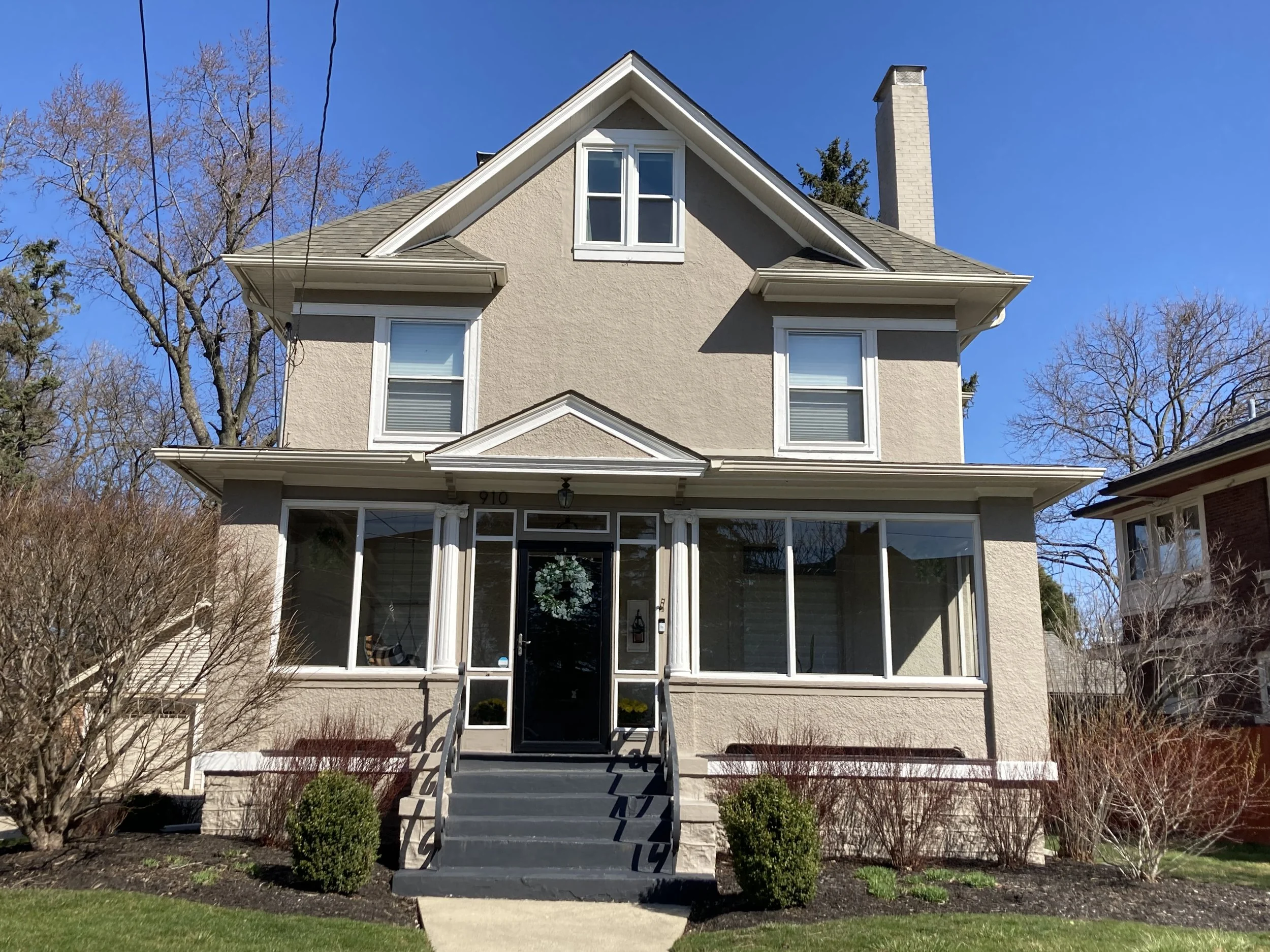
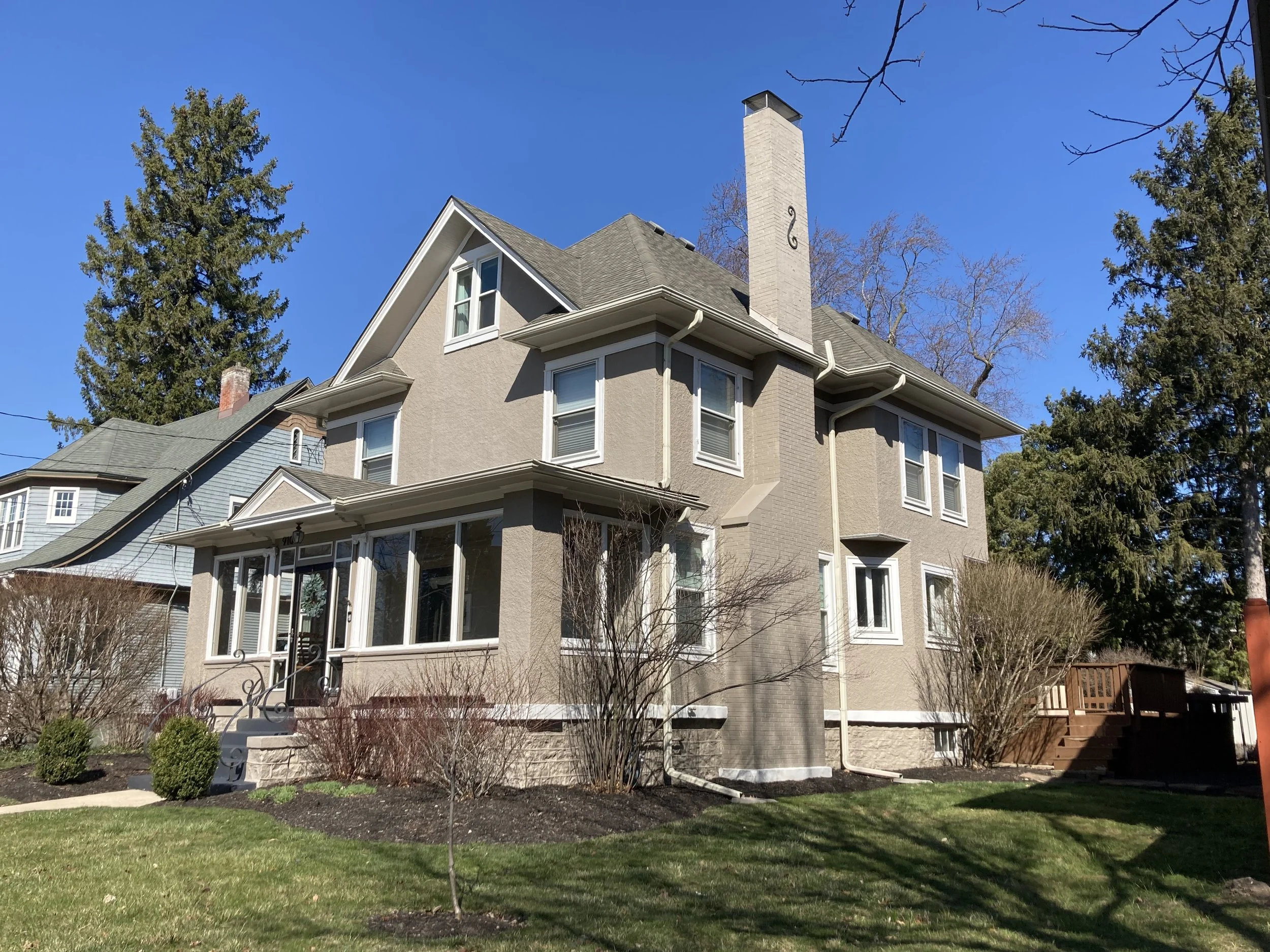
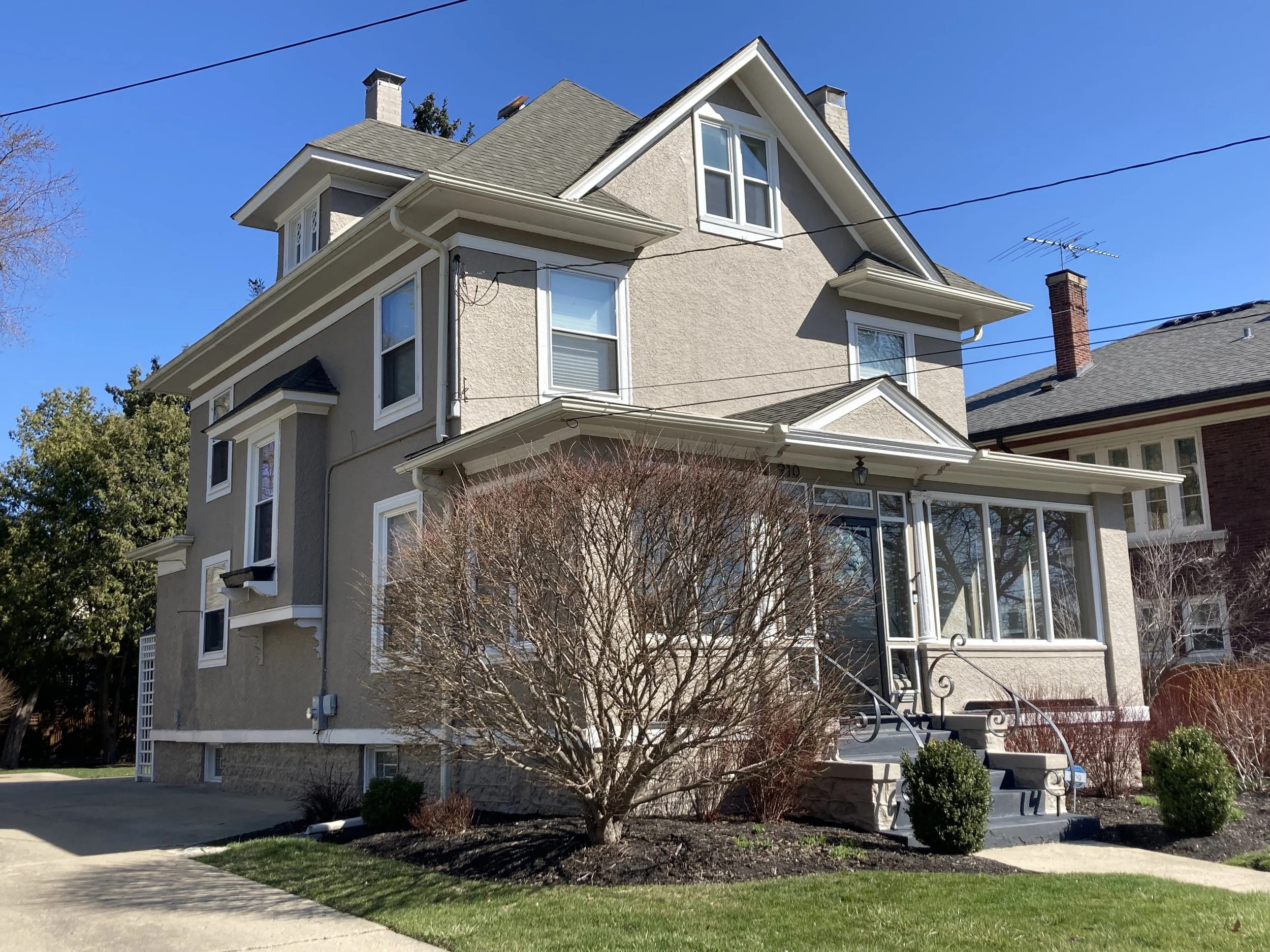
The configuration of a square house with two stories under a hipped roof became known as American Foursquare. American Foursquare enjoyed popularity from the early 1900s well into the 1920s. It was found in both rural and urban settings. Actually, the style was called “box house” at the time the homes were built; the term “American Foursquare” was substituted later. The box house is a square or rectangular 2-story structure under a hipped roof. Dormers, usually hipped, but sometimes with a shed or gabled roof, were commonly seen on any or all of the four elevations. The term “foursquare” describes the basic shape and the fact that such homes were usually nearly square and most commonly had four rooms on each story. Although many of these homes lacked extensive decorative detailing, some stylistic elements, including Colonial Revival, Prairie or Arts and Crafts Styles, were often applied to porches, bays, dormers, window detailing and door configuration.
As was not uncommon, the architect of 910 West Highland chose decorative elements from a variety of named styles. The square shape of the house is relieved by the two-story bay on the south elevation, with its cutaways on the first floor, and by the square oriel bay with its hipped roof and curved brackets on the north elevation, both reminiscent of the earlier Queen Anne Style. We see Colonial Revival elements, including the iconic front entry columns and pediment, the wide eave returns, and the leaded glass transom on the west elevation. The through-wall gabled wall dormer on west elevation reflects the gable of the porch entry. The wide overhanging eaves and the horizontal band above the second story windows are a precursor to the later Prairie Style. The full-width hipped porch with square columns and a knee-wall was a common feature of Foursquare homes. The one-over-one windows are original to the house.
Sources: 1995 Heritage Plaque Application; Audio: TextAloud