
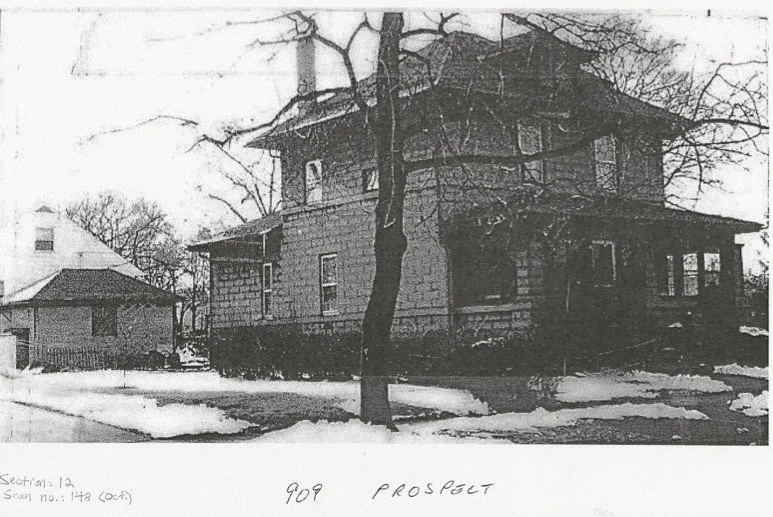
909 PROSPECT BOULEVARD
HISTORIC SIGNIFICANCE
Bounded by Dundee Avenue on the east, Interstate 90 on the north, Kimball Street on the south, and the Fox River on the west, the northeast area of Elgin was developed during the course of 150 years on land originally claimed by early settlers Phineas J. Kimball and Vincent Lovell. Kimball’s Second and Third Additions south of Jefferson Street were platted in 1848 and 1854, and contain most of the oldest homes in the area. The homes in Lovell’s land, north of Jefferson Street, are generally later styles, including most of the Midcentury Modern homes in the area.
William Grote was a land developer active in the area from the 1880s. It was he who persuaded businesses such as Illinois Watch Case Company, Ludlow Shoe Company and the Cutter and Gossett Shirt Factory to locate in the northeast section of town. The growth of factory jobs created a need for residential housing, and led Grote and others to plat subdivisions here. In 1881, Stephen Slade platted his fruit orchards between Spring Street and Center Street north of Slade Avenue. The long rectangular lot to the east of 909 Prospect was initially a shoe factory, then became the home of Voller Chewing Gum Factory. After its bankruptcy in 1890, the building housed the Illinois Creamery Company. The building was razed in 1929.
ARCHITECTURAL SIGNIFICANCE
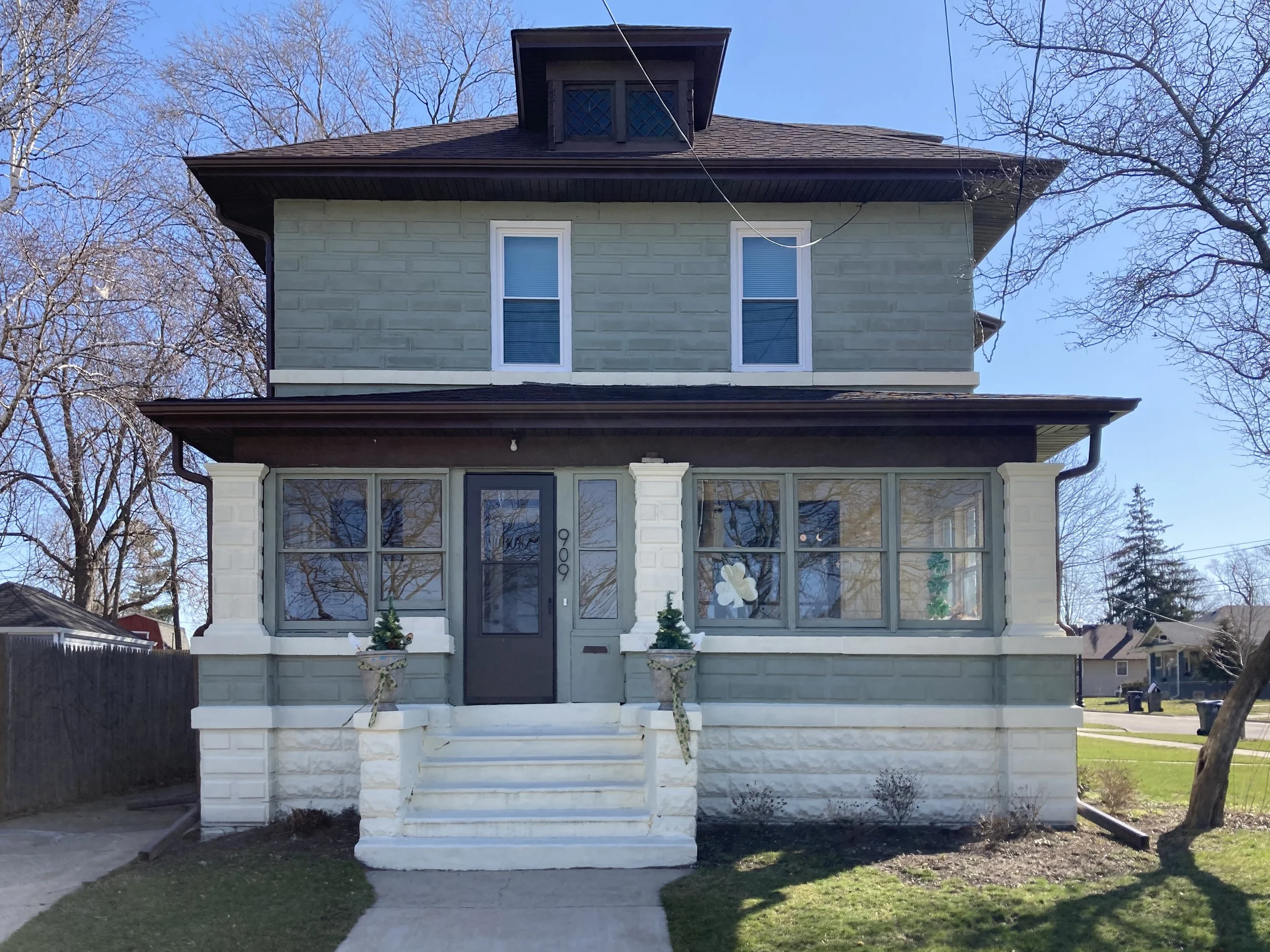
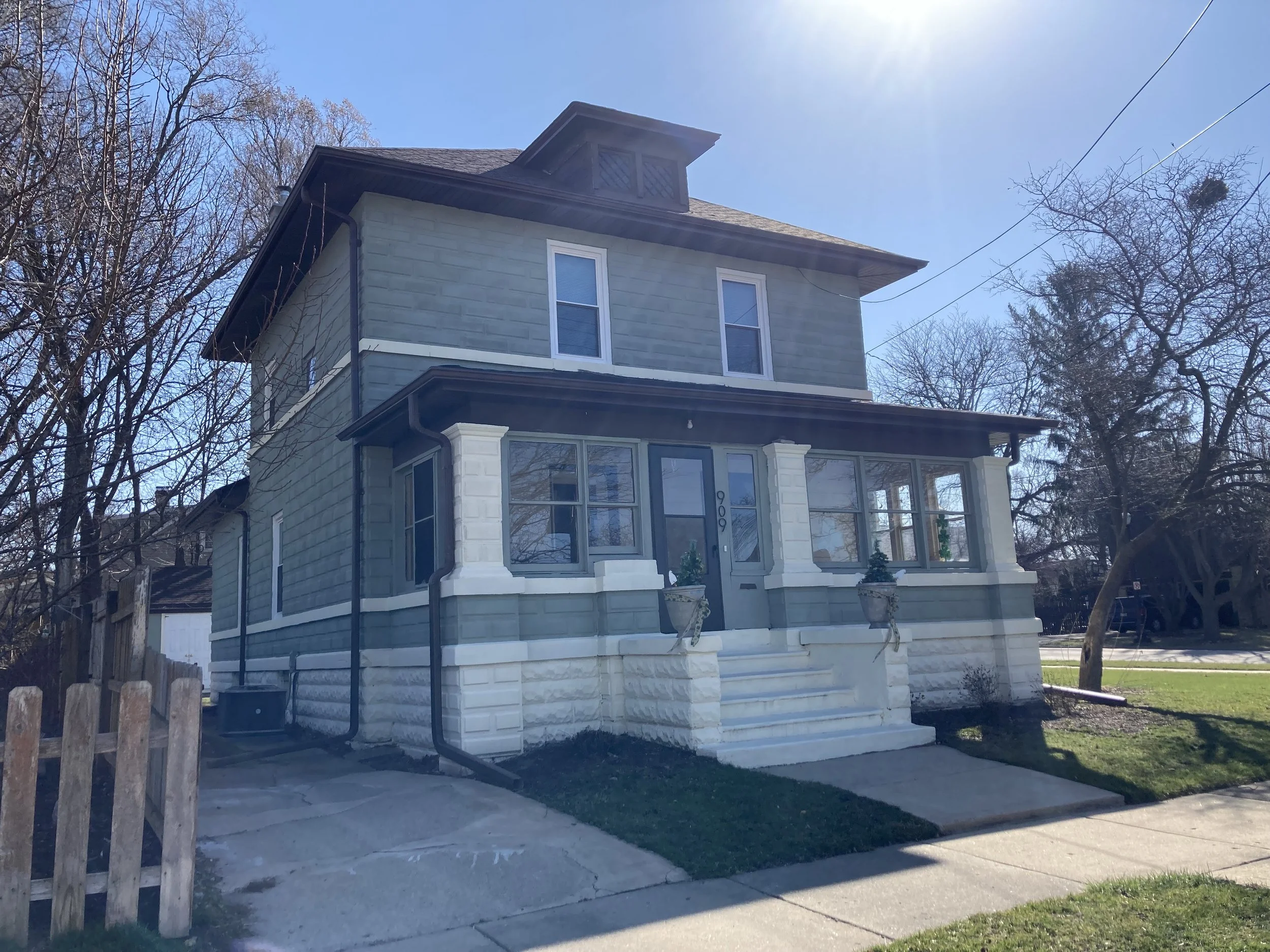
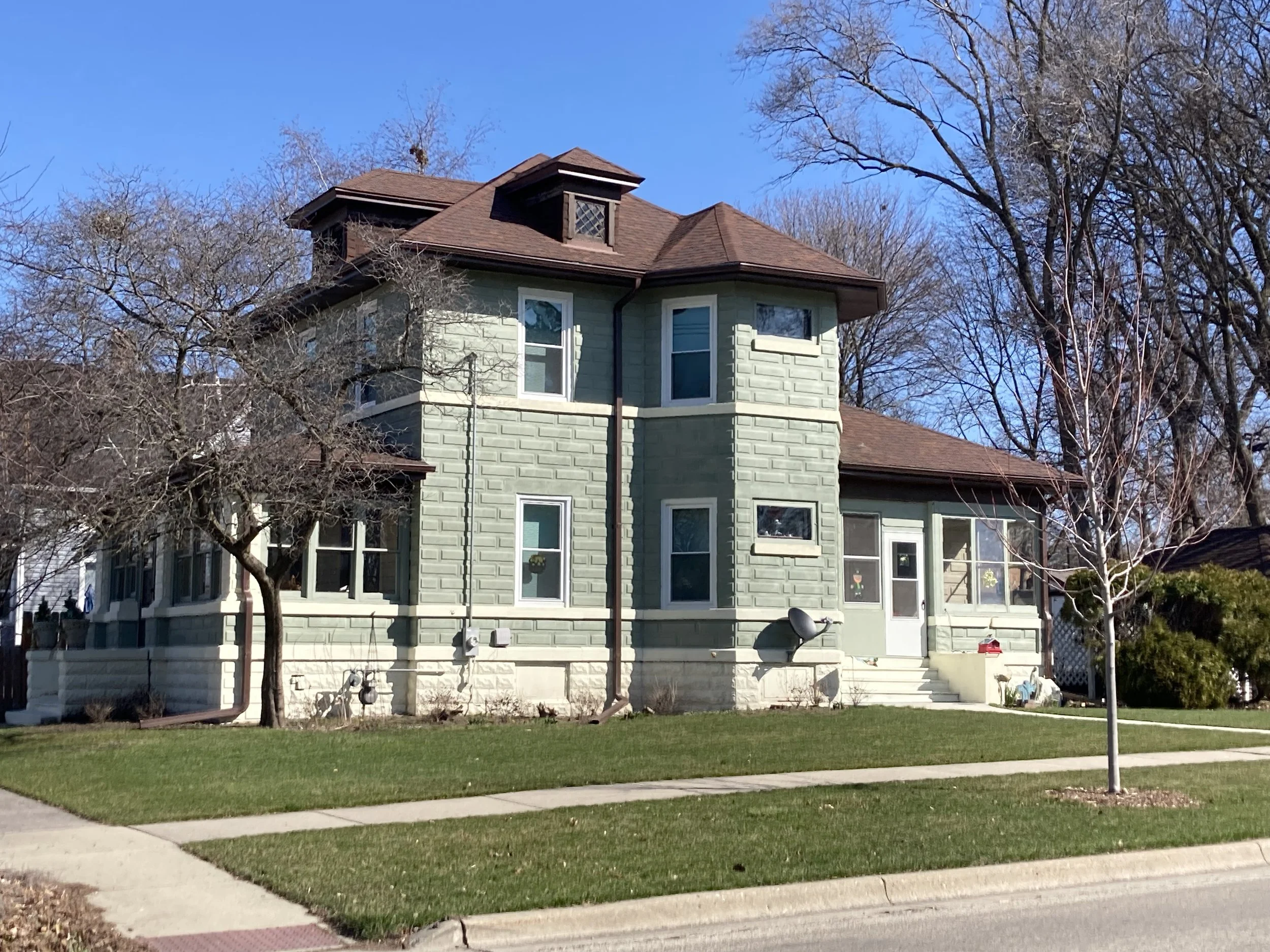
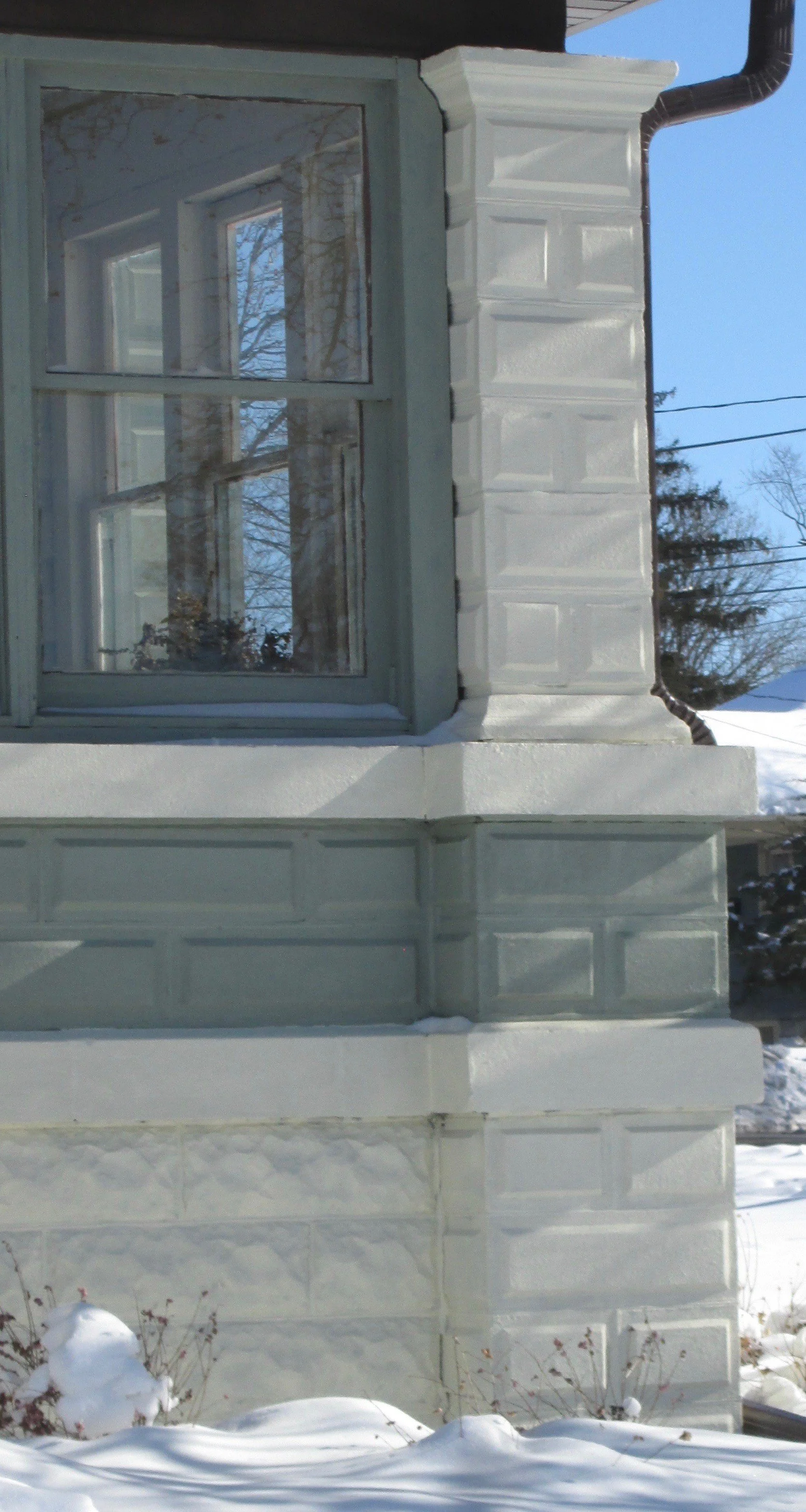
The Del Carlos have already put a lot of work into 909 Prospect. Some windows had to be replaced. The Del Carlos hired a mason to clean the cast concrete blocks. The stains could not be removed, so he tuckpointed it and replaced damaged chimney bricks and then coated the house with stain, using a period-appropriate green with cream colored trim which accents the horizontal features. Denny stained the garage the same colors and added a flat-roofed garden shed on the west side of the garage, matching the house colors.
They have improved the landscaping, repaired front and side porch steps, updated the 1960s kitchen using period appropriate detailing, and painted interior walls and woodwork. Central heat and air conditioning were added.
Plans for the future include replacing the dilapidated porch windows and screens. On the interior, they plan to update the second-floor bath, remove a partial wall built across the entry to the sitting room, and replace an inappropriate entry closet door using one of the original upstairs doors.
Sources: 1993 Heritage Plaque Application; Audio: TextAloud