770 W. HIGHLAND AVENUE
HISTORIC SIGNIFICANCE
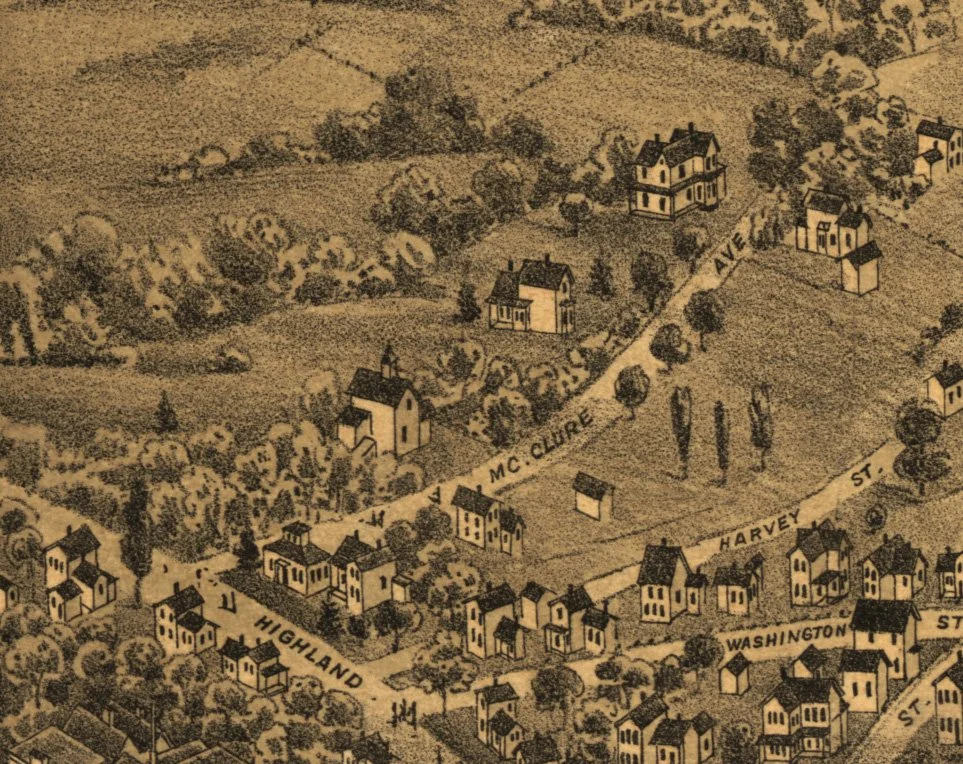
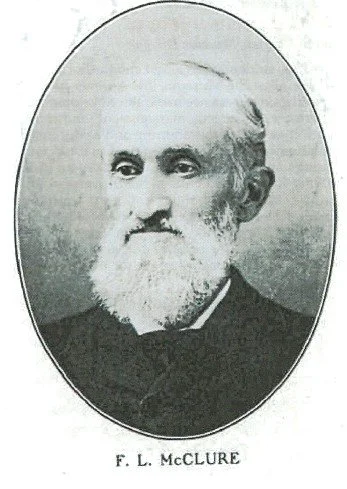
Finla McClure was from New York and helped set the stage for the development of Elgin’s west side when he bought 108 acres of land from Charles C. Kimball. He established a farm along the Galena Road (now Highland Avenue) that contained a natural spring. He built a home on this land which is now 272 McClure Avenue. This home was expanded in 1871 to what is seen today. In 1851, he deeded his farm to his son, Finla Lawrence McClure.
Finla L. and his first wife, Levantia, had one child, Charles Vincent. With his second wife, Fannie Wilder, he had one child, Bertha, who married into the wealthy Bosworth family. Finla L’s keen business sense made him a wealthy man as he managed his farm, ran a milk business, and built and operated Elgin’s first ice house. The same skills served the city of Elgin well when McClure held office as a town trustee in Elgin’s early years and later as an alderman. He distinguished himself by helping reorganize and promote the Elgin Packing Company, thus saving it from insolvency and becoming its business manager.
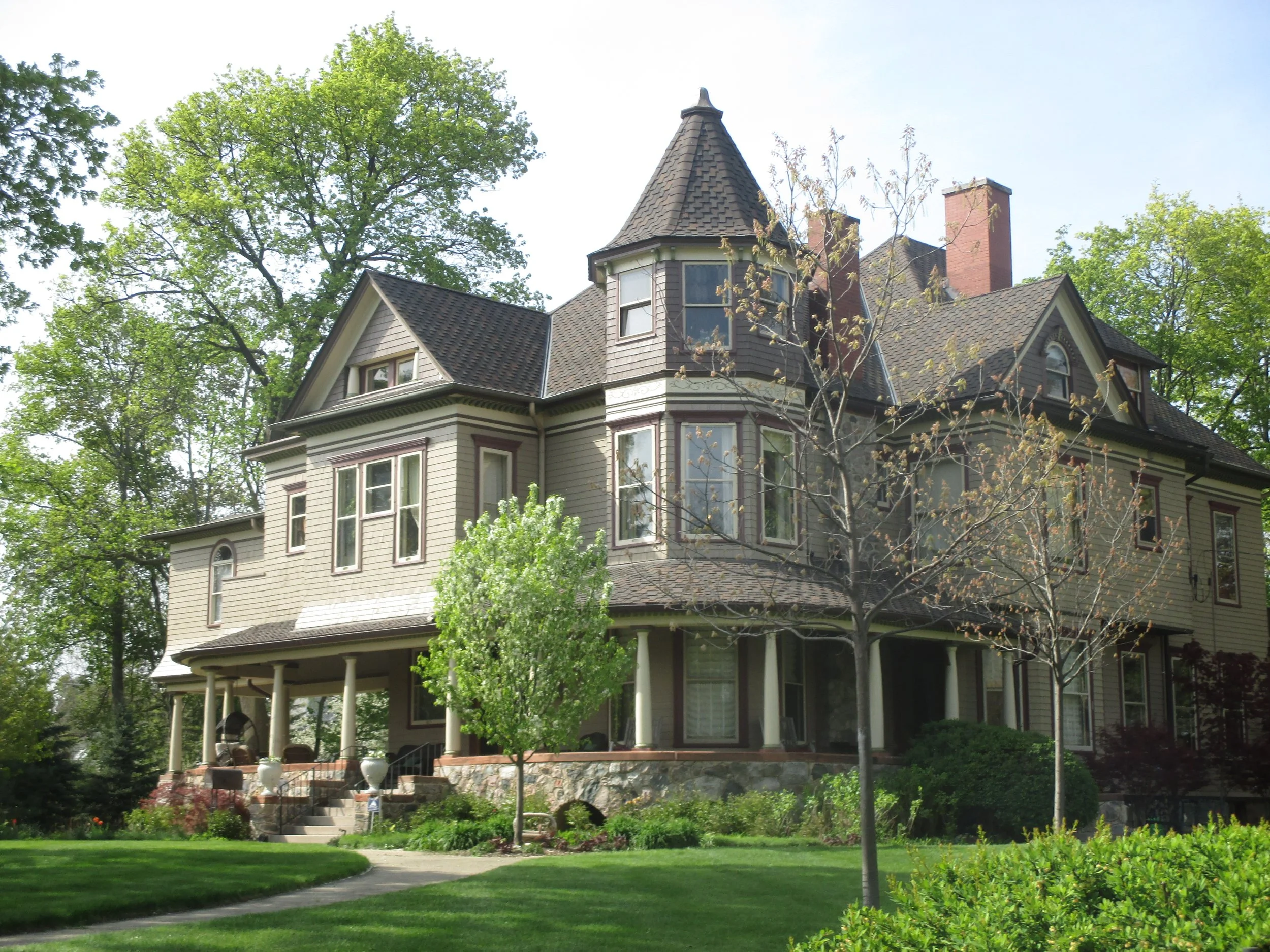
1891, when Finla L. was 68 years old and retired, he hired local, notable Elgin architect, William Wright Abell to build his new home at 770 W. Highland Avenue. The mason was Andrew Magnus and the builder was Martin Bullard. After it was completed the house was featured in the Daily Courier and described as an “attractive design” with the cost of around $10,000. Unfortunately, his wife Fannie was only able to enjoy her new home for less than a year as she died in February 1892. Finla L. occupied the home until his passing in 1900 in Arizona. That year, the home was sold to astute businessman, Willis Lyman Black for $15,000.
Black was an Elgin native and after graduating from the University of Chicago, he began working at the Elgin Advocate, a weekly newspaper. By 1886, Black purchased half interest in the business and was the principal stockholder in both the First National and Elgin City Banking Company. He also was associated with numerous other Elgin businesses, one of which was Elgin Wind Power and Pump Company.
Black passed away in 1916 with his home transferring to his daughter, Mareta and her husband, William McCredie, Jr. William outlived his wife and remained in the home until his passing in 1980, ending the 80 years of family ownership.
ARCHITECTURAL SIGNIFICANCE
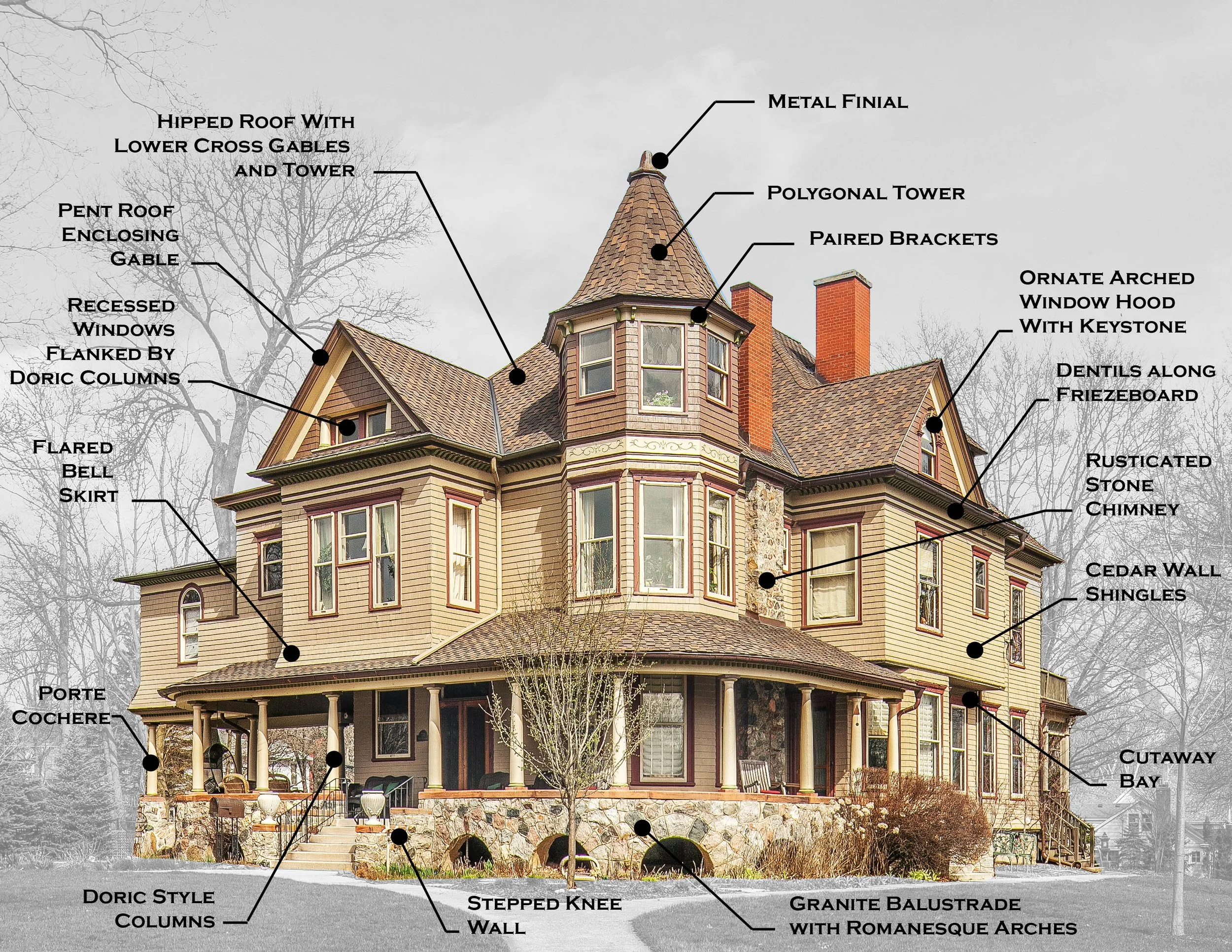
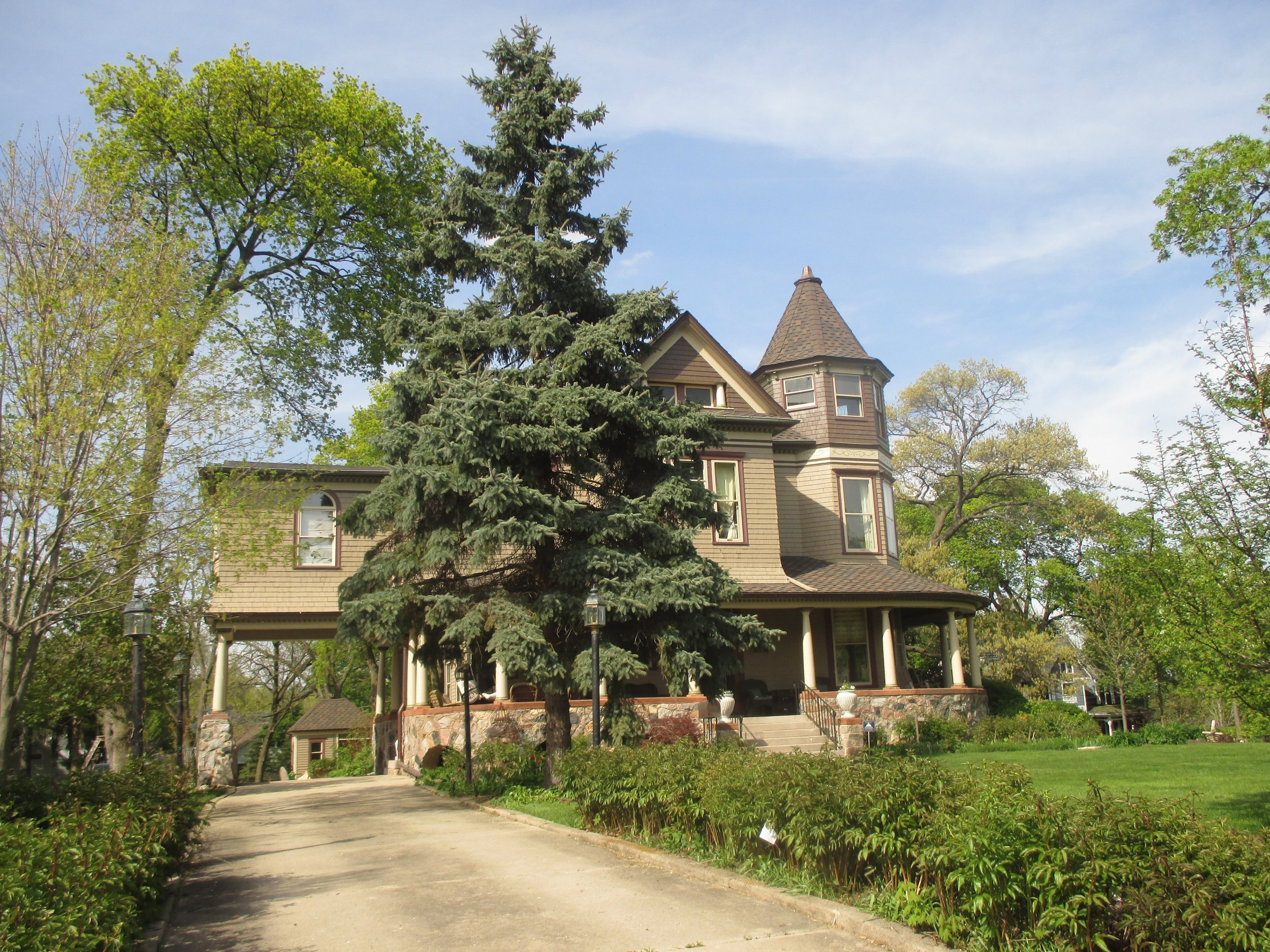
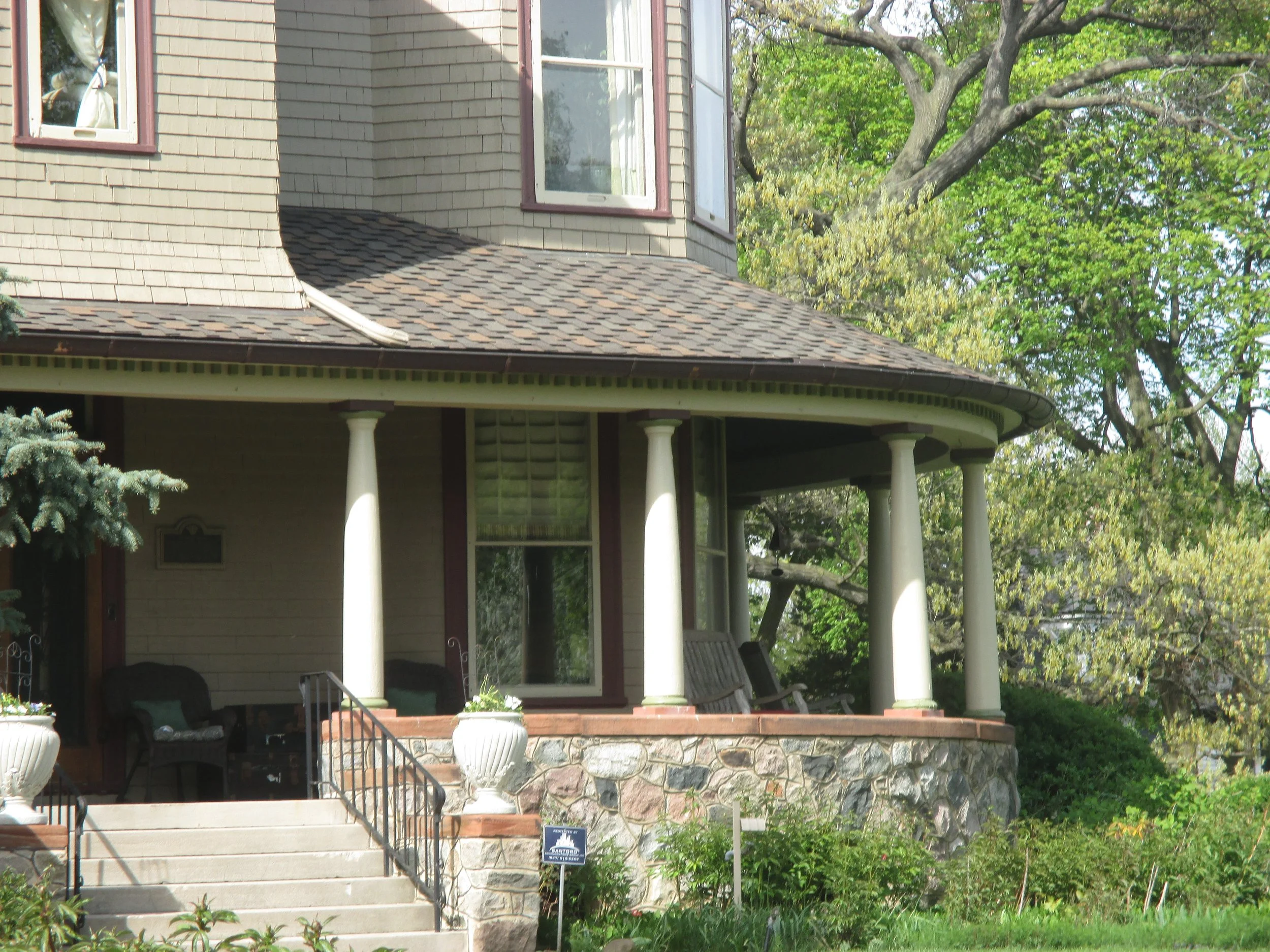
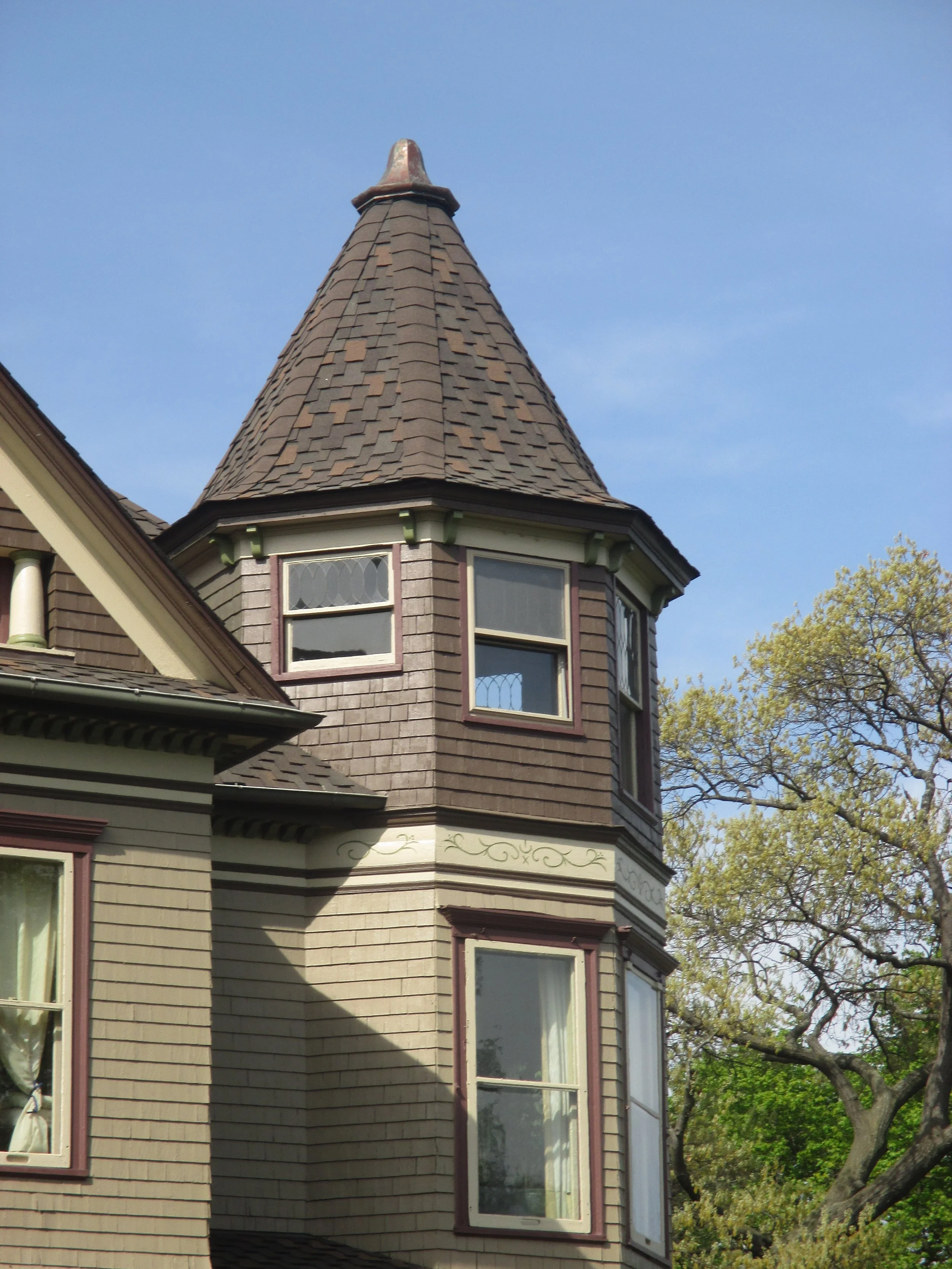
770 W. Highland Avenue is an excellent example of the Shingle Style. The Shingle Style was thought of highly in Elgin and was considered a design for wealthier citizens. This style is a combination of several characteristics including the Queen Anne, Richardsonian Romanesque and Colonial Revival styles. One of the most significant features of this home is its expansive wrap around porch with a granite balustrade with Romanesque arches, tapered columns and dentils that follow the box beam. Another significant feature is the home’s three story octagonal tower. The tower has an ornate curved frieze that separates the second and third floors, with paired brackets and a flared witch’s cap and metal finial.
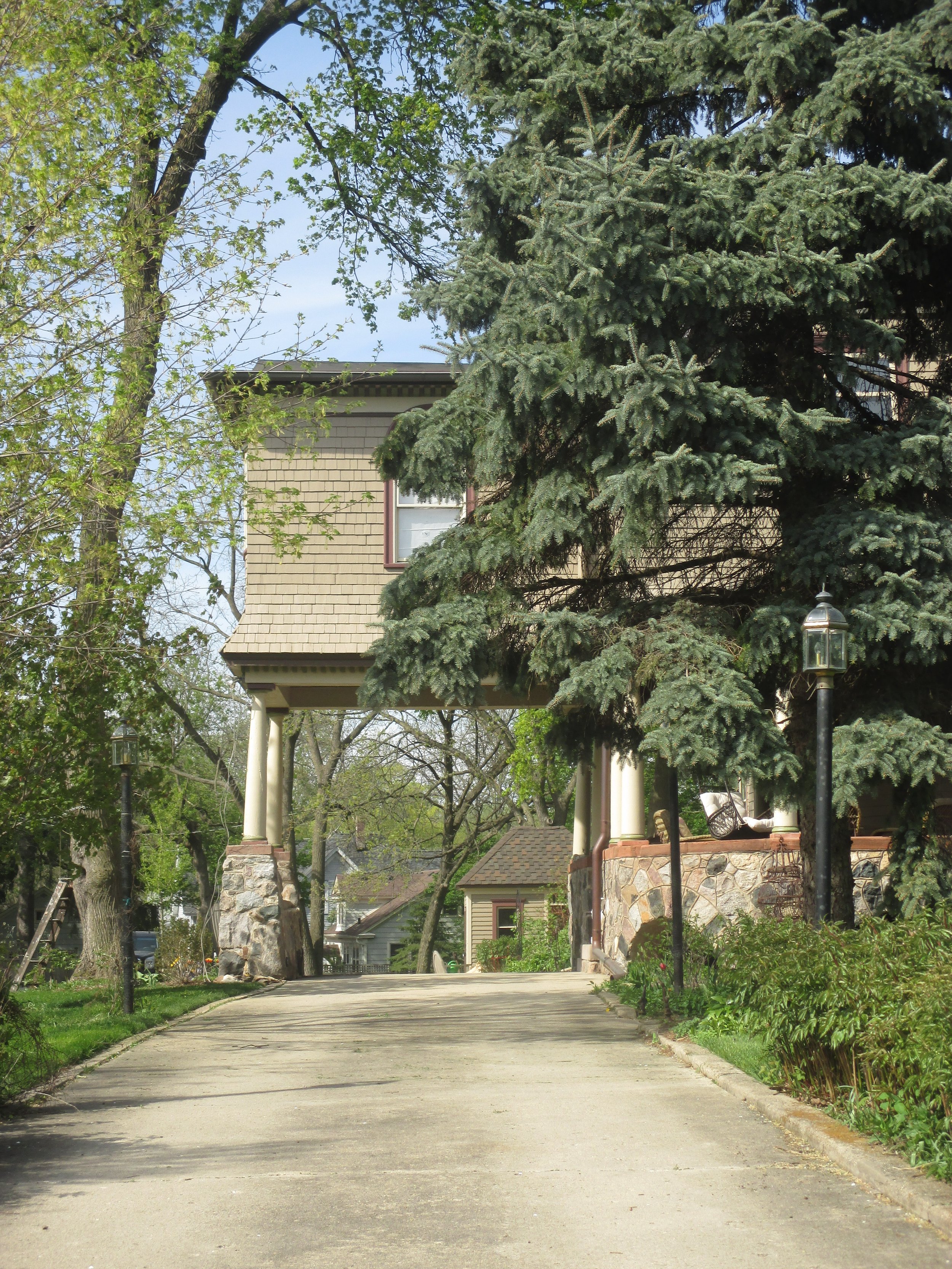
At the end of the wrap-around porch is the porte-cochere, also known as the carriage entrance. This is where a carriage would pull up under this passageway and guests would step up directly onto the porch.
Although the home was less than 10 years old, Black (re)hired W. W. Abell to redesign the home. William G. Wilcox was the carpenter and nephew of John S. Wilcox, a General in the Civil War. The work began in 1900 and was completed in 1901. The result was a “divine design” that enhanced the exterior, rearranged parts of the interior, and added richness and style overall. Part of the interior makeover included the reconfiguration of the front stairway from the traditional L shape into the curving one seen today. The front doors are of oak with one large beveled glass panel. The doors lead into a small vestibule where there is a small mosaic tile with the initial “B” set into it. The same letter “B” also adorns Black’s monument at Bluff City Cemetery. The home also features striking stained-glass windows, one of which depicts a Grecian painter and his wife and is found in the foyer. This artwork was commissioned by Black. Other alterations by Black included the addition of floral patterned tapestry wall fabric found above the wainscoting, addition of gas-to-electrified wall sconces and an elaborately designed Dining Room.
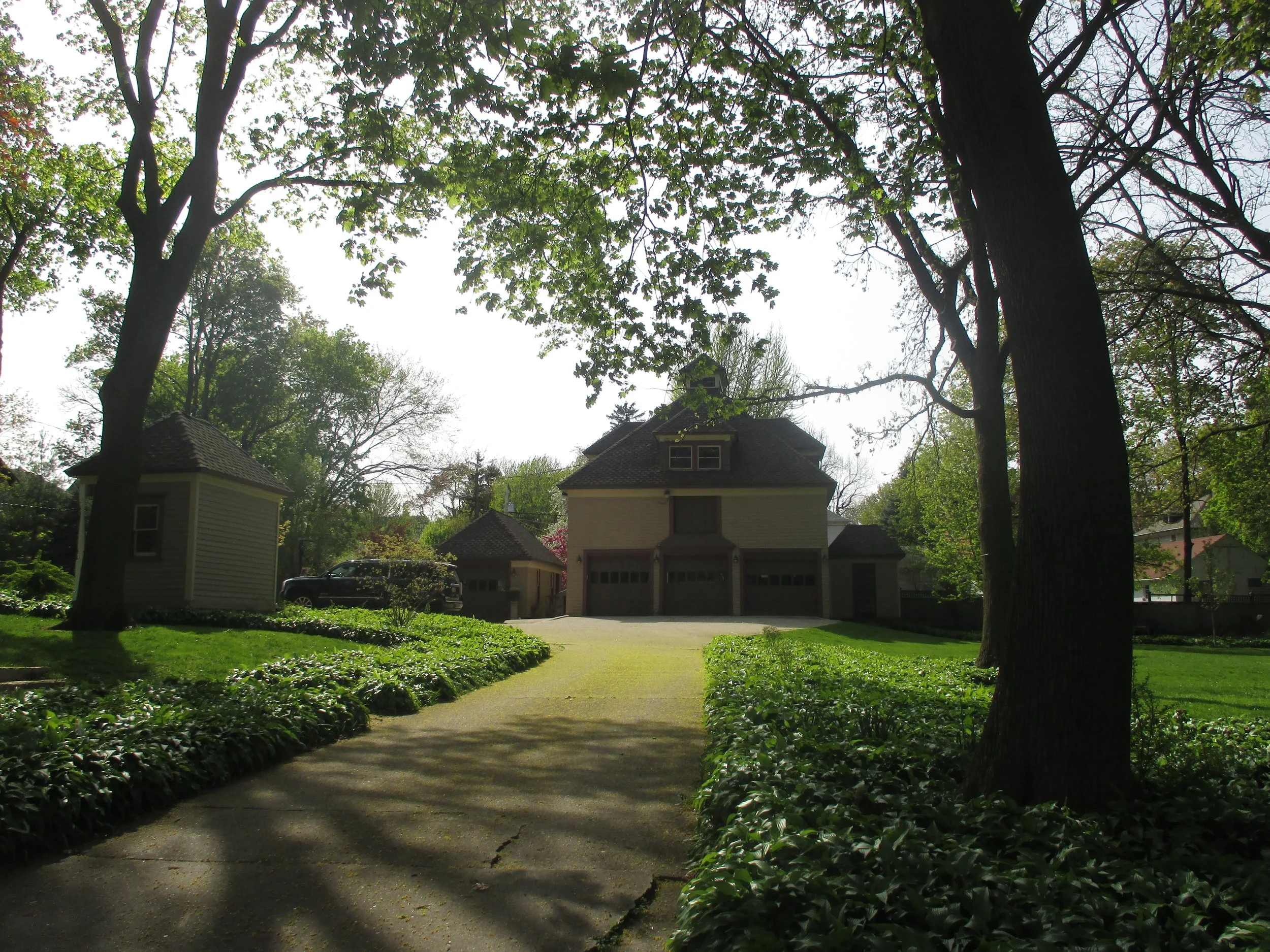
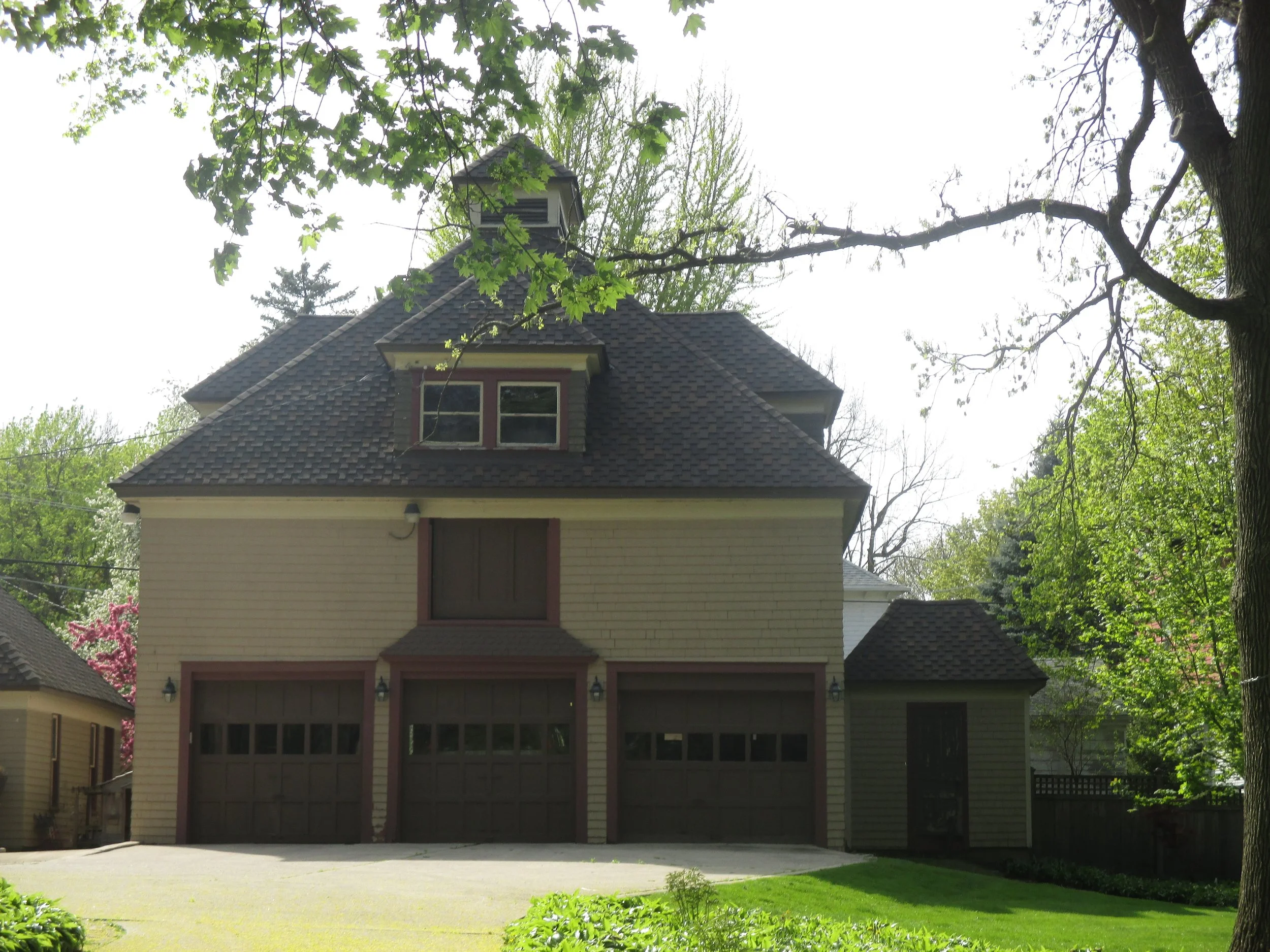
The corner property also features a three-bay Carriage House, one-car garage, a shed and an excellently maintained three-seat outhouse, a rarity in Elgin.
770 W. Highland Avenue was designated as a local landmark in 2005.
TIMELINE OF PREVIOUS OWNERS
Sources: 2005 Landmark Application